

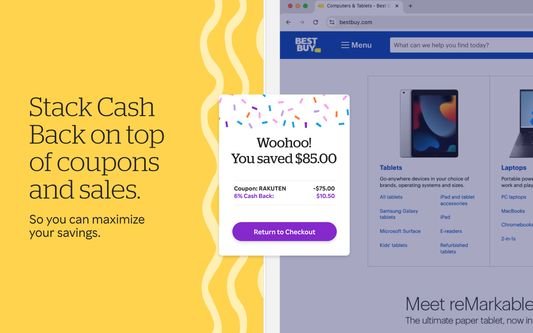
Why Combining Coupons and Cash Back Works
Coupons and cash back reduce your cost in different ways, which is why they often work well together. Coupons lower the price immediately by reducing the subtotal at checkout. Cash back typically returns a percentage of your eligible spend after your purchase tracks and posts. When both apply, you can both pay less now and earn money back later.
The Golden Rule: Cash Back First, Coupon Second
Most cash back programs require you to begin your shopping trip through their link or activate an offer before you check out. If you apply coupon codes first and only later try to activate cash back, your purchase may not track properly. To keep things simple and consistent, treat cash back activation as the first step of your shopping routine.
A practical order that works for most online purchases looks like this:
- Activate cash back through a portal, app or browser extension.
- Add items to your cart.
- Apply a discount coupon code at checkout.
- Complete payment in the same session.
Step by Step: How to Combine Coupons and Cash Back Online
1. Find a coupon, but don’t check out yet.
It’s fine to look for a promo code early, but you should avoid hopping through too many sites or opening lots of tabs right before checkout. Many shoppers do better by starting with the retailer’s own promotions, because they are often the most compatible with cash back tracking. On-site banner codes or email signup codes, for example, are typically less risky than random codes from unknown sources.
2. Activate cash back and start your shopping trip.
Once you’re ready to buy, activate cash back and click through to the store from that portal or app. Complete your purchase in the same browser on the same device, because switching devices mid-checkout can disrupt tracking. If you need to compare prices, it’s safer to do so before activating cash back.
3. Review exclusions before you finalize your cart.
Cash back is usually calculated on eligible spend, which can be narrower than your full order total. That means certain items may not earn cash back even if the rest of your order does. Common exclusions include gift cards, taxes and shipping, and some subscriptions or marketplace purchases.
4. Apply your coupon code at checkout.
After you’ve added your items, apply the coupon code during checkout and confirm that it reduces your total. In many cases, a standard sitewide percentage-off code stacks smoothly with cash back. Free shipping codes also tend to work well because they often don’t change the item subtotal, which is what cash back is frequently based on.
5. Pay in a way that keeps the session intact.
Some payment methods send you through an external flow, which can interfere with tracking. That doesn’t mean you can’t use alternative payment methods, but it does mean you should keep a close eye on whether your cash back posts properly afterward. Save your order confirmation email and consider taking a screenshot of your cash back activation, especially if the purchase is large.
Comparison Table: Stacking Scenarios That Typically Work
Real Examples: What Stacking Looks Like in Dollars
Stacking can feel abstract until you see the math. Here are two common scenarios that show how the savings can add up.
Example 1: Coupon + cash back
If a $100 item has a 20% off promo coupon, your subtotal drops to $80. If your cash back rate is 10% on eligible spend, you could earn $8 back. In that case, your effective cost is $72 (before considering any card rewards).
Example 2: Triple stack (coupon + cash back + card rewards)
Using the same example, you pay $80 after the coupon and earn $8 back from cash back. If your credit card earns 2% back on purchases, you could also earn $1.60 in card rewards. Your effective cost becomes $70.40.
In-Store Stacking: When It Can Be Even Better
In-store stacking can be powerful because retailers may allow store coupons, manufacturer coupons, and loyalty perks at the same time. If your cash back program offers in-store cash back through linked cards or receipt uploads, you may be able to layer those savings too.
In many cases, the smoothest in-store approach is to use one store coupon and one manufacturer coupon (if permitted), then ensure your loyalty account is applied at checkout. After that, you complete the cash back requirement—either by paying with a linked card or submitting the receipt—depending on how the program works.
Common Mistakes That Break Coupon + Cash Back Stacking
Many “missing cash back” situations happen because the shopping session changes or the offer terms weren’t met. The most common problems include activating cash back after you already started shopping, using a coupon that isn’t eligible, or checking out through a redirected flow. It’s also easy to lose tracking if you open multiple tabs, switch devices, or let the cart sit for days before completing the purchase.
If you want to reduce mistakes, focus on consistency. Start your trip from the cash back portal, apply the coupon once at checkout, and finish the purchase in the same browser session.
Pro Tips for Stacking Savings Reliably
You don’t need a complicated system to stack deals effectively. A few habits make a big difference.
- Prioritize on-site promo codes, because they’re often compatible with cash back.
- Avoid testing too many discount coupon codes right before checkout, since constant changes can sometimes interfere with tracking.
- Shop during boosted cash back events when possible, because higher rates amplify your savings.
- Keep proof of activation and purchase confirmation until cash back posts.
Top FAQs
- Can I use a coupon and still earn cash back?
Yes, many purchases still earn cash back when you use a coupon, especially if the coupon is a standard sitewide promotion or store-provided code. The biggest requirement is that you activate cash back first and follow the program’s terms.
- Why didn’t my cash back track after I used a coupon?
Cash back may fail to track if the coupon isn’t eligible, if the shopping session changed, or if your order included excluded items. It can also happen if you checked out through a redirected payment flow or switched devices during checkout.
- Does free shipping affect cash back?
Free shipping codes usually stack well because cash back is often calculated on the item subtotal, not shipping. However, it’s still wise to check the retailer’s terms if the order is large.
- Can I stack cash back with store rewards or points?
Often you can, but redeeming points may reduce the “eligible spend” used to calculate cash back. This means you might still earn cash back, but on a smaller amount.
- What items are commonly excluded from cash back?
Gift cards are one of the most common exclusions. Taxes, shipping, and certain subscriptions or marketplace purchases can also be excluded depending on the store.
Final Takeaway
If you want a simple rule you can use every time, remember this: activate cash back first, then apply your coupon at checkout. When you build this habit, stacking becomes routine and you’ll catch more savings without doing extra work.


Recent Comments